Heritage Meets Sustainability
Quarry Bank, a major National Trust site in Cheshire, faced a challenge: how to make sustainability feel relevant to visitors without it feeling like an ‘add-on’ or a lecture. They wanted to explore environmental issues through the lens of their industrial cotton-manufacturing history, and needed a conceptual framework that could provide both intellectual depth and high visitor engagement. The tension lay in connecting 18th-century industrial heritage with 21st-century environmental urgency in a way that felt seamless, engaging, and reflective for families and general visitors. How to tell a story of past industrial progress that didn’t ignore the environmental costs, but also didn’t leave visitors feeling overwhelmed?. they wanted an approach to bridge the gap between the historical consequences the Industrial Revolution and the systemic sustainability challenges we face today, that brings the amazing experiences available at the site into a coherent, broader, living context.
About the Client
The National Trust is the UK’s largest conservation charity, stewarding hundreds of historic houses, gardens, and ancient monuments. Quarry Bank is one of their flagship industrial sites, telling the story of the Industrial Revolution’s impact on people and the landscape. For the Trust, sustainability is not just a modern operational requirement but a core part of their mission to protect special places ‘for ever, for everyone.’ They are increasingly focused on how their sites can serve as platforms for public engagement with climate change and nature recovery.
The Approach
The RoundView team provided the foundational research for a year-long exhibition titled ‘Unintended Consequences’, a name drawn directly from RoundView’s systemic framing. The engagement was deep and multi-layered, involving workshops with roughly 50 National Trust staff, volunteers, and the artistic team developing the exhibit. We conducted extensive archival research through the John Rylands Research Institute and Library, applying a RoundView lens to historical materials to uncover the ‘Big Heritage’ of the site’s environmental story. This involved collaborating closely with artist Dr Jen Southern from Lancaster University to translate these conceptual insights into physical installations and curatorial narratives.
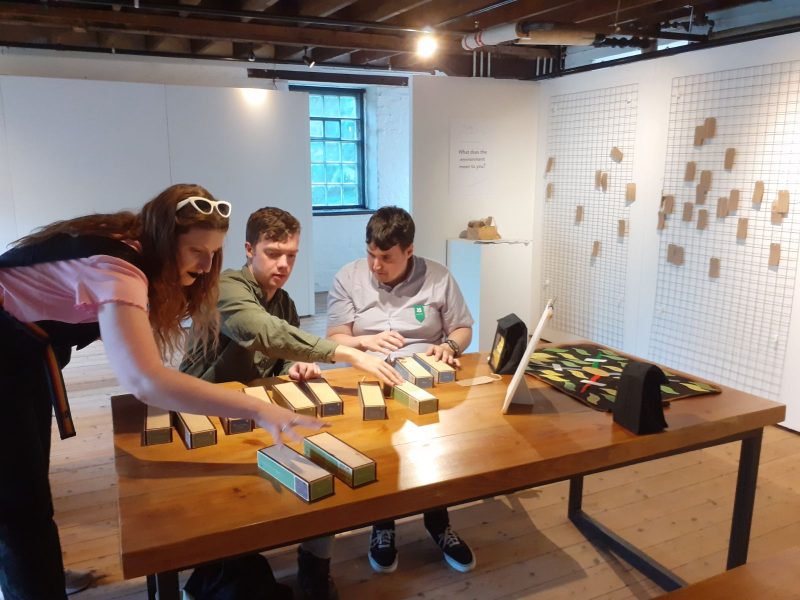
Crucially, physical RoundView puzzles were integrated directly into the exhibition space, allowing visitors to move from conceptual reflection to hands-on exploration. These stand-alone exhibits were complemented by workshops with 285 school children from the local area, with a combination of physical puzzles and outdoor games to teach the RoundView.
The RoundView informed the curatorial design from the outset, rather than being retrofitted as a supplementary activity. The engagement felt like a shared journey of discovery between the researchers, the artists, and the Trust’s own heritage experts, creating a unified narrative that resonated across the entire exhibition.
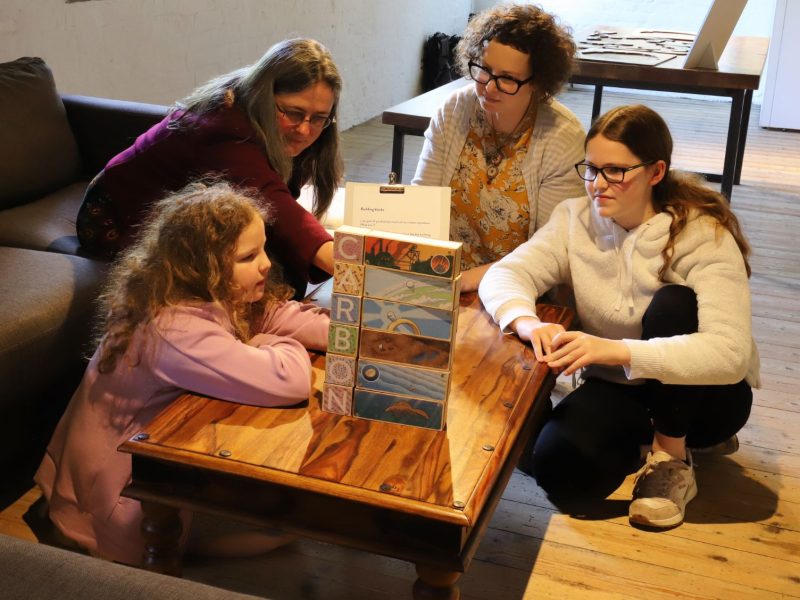
Image courtesy of David Watson

The level of engagement that we saw wouldn’t have been as high without the RoundView. If we had just had the art, without the RoundView games and learning tools at the back of the gallery, I don’t thinkpeople would have connected as much to the subject and to the themes, and to this idea of change and hope.
The Outcomes
The exhibition demonstrated that a rigorous sustainability framework can enhance heritage interpretation rather than compete with it. Visitors engaged deeply with both the installations and the physical puzzles, with families using the games as safe spaces to discuss their own environmental impacts. Feedback from visitors in response to the exhibition shows that it inspired people to “be hopeful that we can move towards a better future for the planet” as it “shows clearer what we are doing wrong and what we could do to make things better”.
The work pioneered a new model for how curatorial thinking can be shaped by systemic sustainability principles, supporting heritage sites in being powerful catalysts for change. The National Trust gained a new way to talk about the Industrial Revolution that felt both historically accurate and modernly relevant, strengthening their institutional credibility as a leader in sustainability engagement.
Why it matters
The project demonstrated that RoundView can scale to public engagement in a major national institution, reaching over 129,000 visitors over its year-long run. One observer, Dr Joe Glentworth, noted that the intergenerational learning was particularly powerful: ‘The games were prompts for families to have difficult but important conversations about their own daily lives in a way that was reflective and safe.’
It shows how heritage and sustainability can be integrated through a shared conceptual language. Each site has a unique story, which can empowering sustainability learning to new audiences.