Seeing the past differently
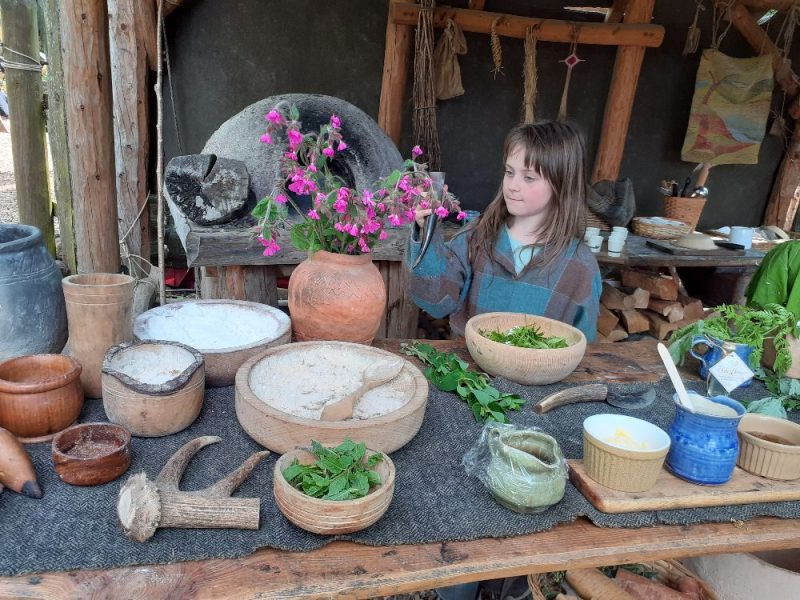
What happens when you bring a systems-level sustainability framework into a living history museum — one where visitors come to handle tools, watch crafts, and inhabit a reconstruction of Iron Age life 2,500 years ago? The Scottish Crannog Centre offered an unusual research context: a site where sustainability thinking is implicit in the daily experience (Iron Age communities as a model of living within ecological limits) but not explicitly framed in contemporary terms.
The question was whether the RoundView could surface and connect that implicit content in a way that extended the museum’s existing interpretive work, rather than sitting alongside it as a separate environmental message. Could a sustainability framework integrate with a heritage setting without displacing what was already there — and without requiring specialist facilitation for a drop-in visitor audience?
Research Partners & Funding
This work was conducted as part of a programme of activity with Dr. Joanne Tippett as a Visiting Academic with the UNESCO Chair in Refugee Integration through Education, Languages and the Arts (RIELA) at the University of Glasgow. The Scottish Crannog Centre — an award-winning living history museum on Loch Tay, Scotland — was the host partner, providing both the site and its existing visitor engagement infrastructure. The UNESCO RIELA Chair supported the design and delivery of the engagement sessions and captured the process as a podcast and video. The partnership brought together heritage interpretation, community engagement and sustainability research within a focused trial.
The Approach
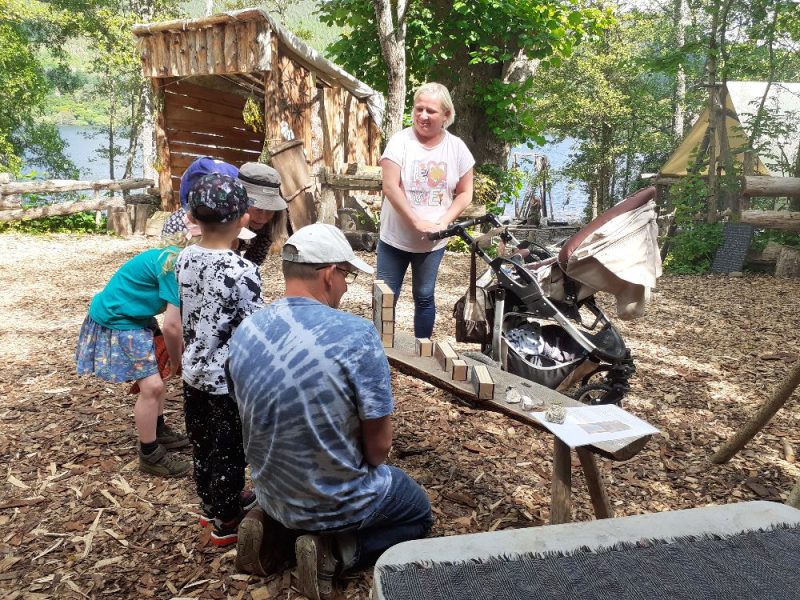
The trial took the form of a two-day ‘Sustainability Takeover’ at the Centre during a peak visitor season. Rather than a scheduled event or separate workshop strand, the engagement was designed to work within and alongside the museum’s existing visitor flow — reaching drop-in visitors without requiring advance booking, prior knowledge, or sustained attention.
We set up stations in the open air, where visitors could engage with RoundView games and short workshop activities, framed as an exploration of the connections between Iron Age resourcefulness and the systemic conditions for long-term sustainability. This allowed the site’s existing craft demonstrations and outdoor exhibits to be integrated into the discussion of learning the RoundView from the hands-on puzzles. The design was deliberately accessible: the RoundView appeared as an extension of the Centre’s storytelling rather than an additional layer imposed upon it.
A key design constraint was that the engagement had to function for diverse drop-in visitors — from young children to retired visitors with deep heritage interests — without relying on prior sustainability literacy or extended facilitation time. The trial was designed to test whether that was achievable.
What We Found
Visitors across a wide age range engaged with the materials. The feedback indicated that the RoundView’s systemic framing provided a useful lens for the museum’s core content, helping visitors articulate the connections between Iron Age human-nature relationships and contemporary sustainability questions that the site had always implied but rarely named directly.
Centre staff reported that the framework gave them new ways to describe their interpretive work that felt relevant to contemporary sustainability debates, without compromising historical accuracy. This was a meaningful finding: the RoundView appeared to extend what staff could say about the site’s significance, rather than imposing an external message. At the same time, the trials produced a key change in the RoundView learning tools – shifting a word puzzle from the word Cotton to Wooden – as a material that can be returned to nature that transcends all cultures and timescales.
The trial indicated that low-threshold, drop-in engagement is viable for RoundView content in heritage settings — it does not require a facilitated workshop structure to function.
Podcast
You can hear a podcast and read more about the sustainability takeover on this University of Glasgow, UNESCO Chair on Refugee Integration through Education, Language and Arts blog.
Why It Matters
Living history and heritage sites represent an under-explored context for sustainability engagement — one where the deep-time framing of archaeology aligns naturally with the RoundView’s systems-level perspective. This trial opened up the question of whether the framework can function as interpretive infrastructure, embedded in a site’s existing storytelling, rather than arriving as a separate environmental programme. If that integration is achievable more broadly, it could extend the RoundView’s reach into cultural institutions that are already doing relevant work but lack a contemporary sustainability language for it.