Creating a shared starting point
Catchment-scale environmental governance faces a persistent challenge, bringing together stakeholders with genuinely different relationships to the land: communities, water managers, farmers, scientists, conservation bodies, local authorities. The River Nith in Scotland provided a test of whether RoundView could serve as a conceptual foundation for a process that went beyond a surface-level consultation exercise.
The question was whether a systems-level framework could function as a shared starting point that all parties could work from, and whether that could form the basis for a documented, replicable model of participatory catchment visioning.
Research Partners & Funding
This work was conducted as part of a British Academy Innovation Fellowship with the UK National Commission for UNESCO. Nith Life, a grassroots, community-led group focused on the health of the River Nith catchment, was the primary community partner. The Galloway and Southern Ayrshire UNESCO Biosphere provided practical support, regional context and strategic framing. The Stove Network, a community arts organisation based in Dumfries, contributed facilitation and creative engagement capacity. Together the partnership brought ecological, community and arts expertise.
The question was whether a systems-level framework could function as a shared reference that all parties could work from, regardless of their diverse starting positions, roles, or technical expertise; and whether this could form the basis for a replicable model of participatory catchment visioning.
The Approach
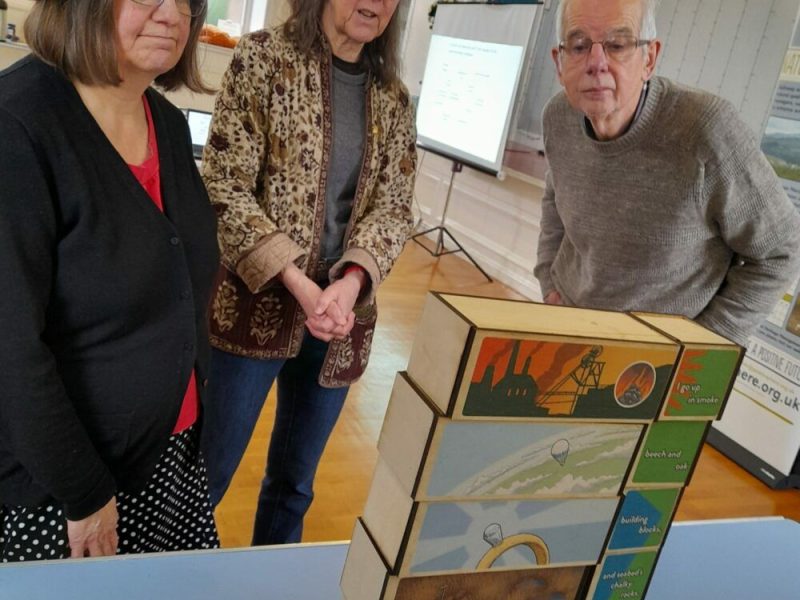
Over the course of 2023, we designed and delivered sixteen engagement events and workshops along the length of the river. These brought together grassroots community members, conservationists, farmers, scientists, and representatives from statutory bodies — groups that do not consistently share a productive common language for environmental decision-making.
Using RoundView’s hands-on learning tools, we helped participants move beyond their immediate concerns and existing positions to explore the systemic principles for the river’s sustainability.
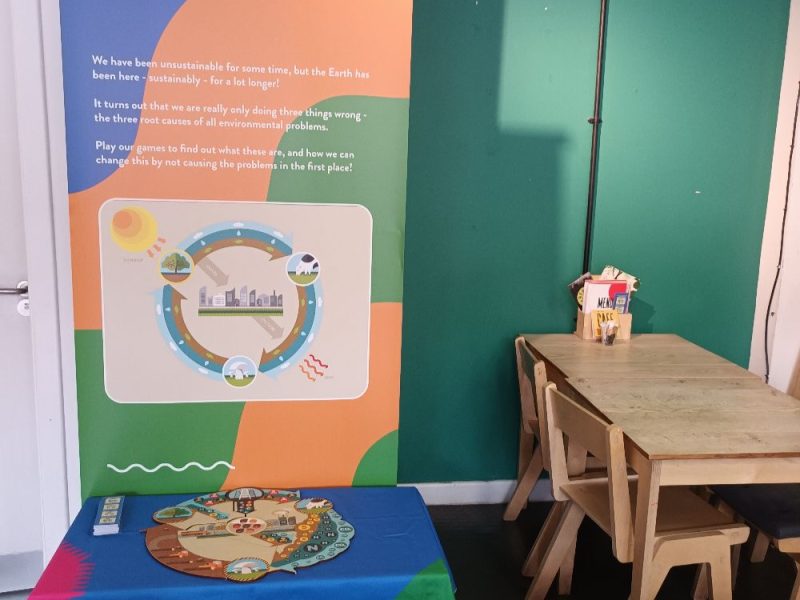
Pop-up events, stalls at festivals and temporary installations in community spaces with the RoundView puzzles complemented the workshops. This provided a way to reach beyond those who were able to come to a facilitated workshop. It also enhanced visibility of the initiative, with several comments from community members that they had seen the puzzles in other civic spaces, and remembered them.
The process was designed to co-produce the foundations of a shared catchment strategy. A central aim was to test whether this approach could generate genuinely shared ground, and to capture it in enough detail to inform future participatory processes at other catchment and landscape scales.
What We Found
Participants reported that RoundView helped them reach a different quality of dialogue than they had expected. One participant noted: ‘I was surprised how difficult the challenge was — not just thinking about what was relevant, but thinking about what was most fundamental. We needed the RoundView to bring it back together.’ This kind of observation recurred: RoundView was seen to create a qualitatively different basis for dialogue.
An important step forward that was discussed was the removal of ‘short-termism’. Participants suggested that gaining a ‘wildlife reserve status’ for the river could be a powerful way to think on a bigger, more ambitious scale. Participants commented that they had “never thought about the Nith as an organism”, and we should “treat the river as a living thing”.
The process produced a comprehensive report and documented dataset representing the foundations of a shared catchment strategy. The partnership reported that the work had strengthened collaboration across agencies and with the local community, and that participants left with a shared language for the catchment’s long-term needs. This document has been used to secure funding for small-scale projects, set within a larger-scale vision. Further workshops in schools and with community groups have been carried out, with partners using the skills and ideas developed in the workshops to take RoundView to wider audiences.
Why It Matters
Participatory catchment planning is required by environmental governance frameworks, but it is challenging to go beyond consultation. The Nith work tested whether RoundView can provide the conceptual infrastructure that makes genuine participation possible — a shared starting point diverse groups can engage with before moving into contested territory. The documented process provides a basis for replication and further research, and is of potential relevance to UNESCO Biospheres Geoparks, national parks, river trusts, and other multi-stakeholder landscape initiatives, where building shared ground is a prerequisite for effective action.