Libraries, Museums & Public Spaces

What if we knew the root causes of all environmental problems? What if we knew their positive opposites?

Then we could use this knowledge to stop causing these problems in the first place.

RoundView is a toolkit for sustainability thinking and learning.
All visitors can enjoy inclusive engagement and learning.

Quote

RoundView games are not ‘accusatory’ in that they do not assign blame regarding climate change onto anyone.

Quote
Quote

It is really fun - I want to recycle more and look after the environment!

Quote
Quote

RoundView toolkit is a ready-made resource that is easy for us to just slot into our activities.

Quote

RoundView: a sustainability toolkit for public spaces

- no specialist knowledge or skills required

From the ambition of ‘Every Library, a Green Library’, to the increasing visibility of sustainability in museum and heritage programming; cultural institutions face a growing expectation to help the public make sense of sustainability and climate change. The question of how to deliver meaningful public engagement can feel daunting, especially when staff are already stretched.

RoundView enables you to lead meaningful public engagement on sustainability, at volume, without the need for significant staff training or expertise.

Quote

The integration of poetry into learning mechanics of the toolkit has been seen as a key link to the libraries’ mission, and a useful hook to explore further literature and resources in the library related to deepening learning about the local environment, heritage and sustainability.

Quote

From eco-anxiety to hope

There is growing eco-anxiety – especially amongt the young. There is a risk that sustainability engagement with a crisis narrative can overwhelm people. RoundView offers a positive message, leading with hope.

Sustainability is broader than carbon or climate alone. With a RoundView installation, your visitors encounter an accessible way to understand the big picture of sustainability, leading to productive conversation: exploration and reflection.

Who this is for:

  • Libraries and archives
  • Museums and galleries
  • Heritage and nature sites
  • Visitor centres
  • Community venues
  • Civic and public spaces

National Trust at Quarry Bank: Hands-on engagement for over 129,000 visitors

Hands-on learning tools make learning easy

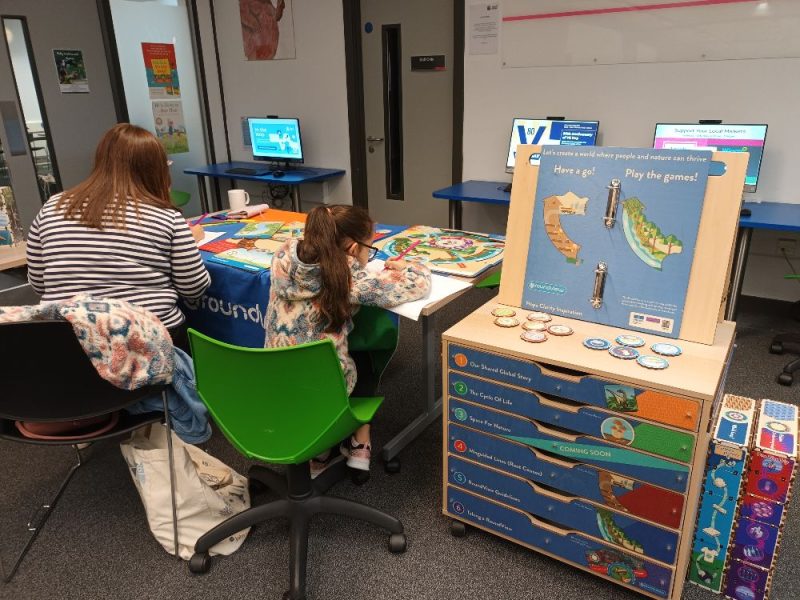
RoundView’s hands-on, self-guided sustainability toolkit enables visitors to explore at their own pace, with puzzles and activities designed to take visitors on a learning journey. Visitors bring their own questions and leave with their own conclusions – a RoundView installation creates the conditions for inquiry.

Your staff don’t need to be experts. The design does the heavy lifting, with clues and key principles built into the learning tools.

Poetry, visual art, and multilingual contributions from around the world are integral to how the engagement works. RoundView’s learning is inclusive, working across ages, languages, learning levels, and cultural backgrounds.

Quote

The games were prompts for them to have difficult but important conversations about their own daily lives, in a way that was reflective and safe.

Quote

Bringing sustainability to life

Schools are under pressure to embed sustainability and climate education in their curriculum and to develop climate action plans, but they often lack materials and capacity to do this.

Libraries and museums host school visits With RoundView you can offer a hands-on, stimulating workshop, affirming your role of being a valued educational partner.


Quote

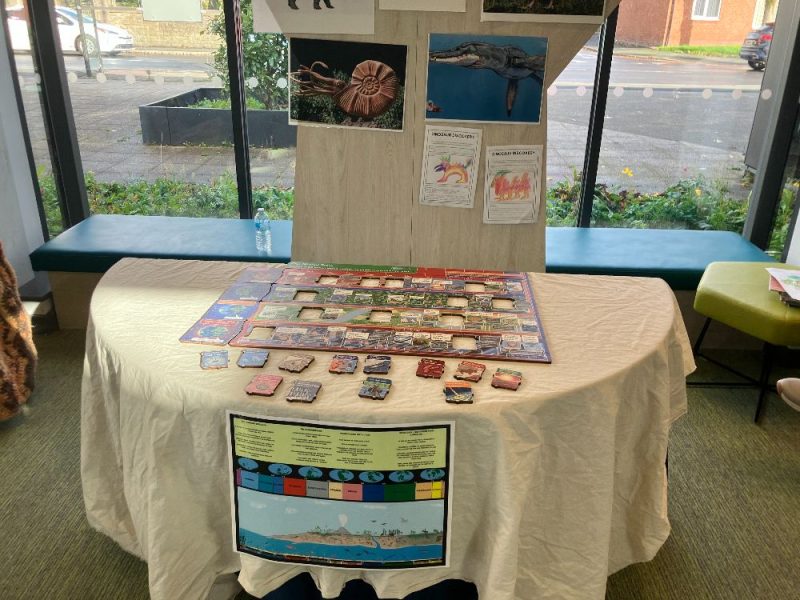
The RoundView educational materials are an excellent resource for engaging young audiences with Natural History and the carbon cycle. The timeline puzzle builds on children’s interest in dinosaurs and Ancient Egypt to explore climate history and encourage discussion around environmental action. The RoundView resources have been successfully utilised in a wide range of events, from activities following talks, to volunteer-led stalls and as stand-alone exhibits.

Quote

Grounded in research, alive in culture

RoundView is grounded in decades of peer-reviewed research in systems thinking and sustainability science.

The form it takes in public spaces is deliberately accessible, designed so that depth is available, but not required. Engaging with RoundView requires no prior sustainability knowledge, only curiosity.
The work has been developed through a British Academy Innovation Fellowship, in collaboration with UNESCO-designated sites, and with institutional partners including Manchester UNESCO City of Literature, scores of libraries across Greater Manchester and the National Trust.

Crannog Centre: Heritage Interpretation as a Sustainability Gateway

What this can look like in practice

Self-guided learning for every visitor

RoundView allows for self-guided learning at multiple layers and levels, from literacy and language to science and systems thinking. Options include:

  • Table-top puzzle activity in a foyer, minimal setup, self-directed
  • Mobile exhibit that leads visitors through the learning process, puzzle by puzzle
  • Hands-on activities for stalls and pop-up events, no specialist facilitation required
  • Forming the inspiration for exhibitions and interpretation

This can help meet the growing need to serve the full range of people that cultural institutions welcome: homeschooling families, young people receiving education outside school, families who want to enrich their learning experience together; visitors from varied cultural and language backgrounds.

School visits as educational partnership

Workshops can vary in length, and can easily be integrated into other activities such as introductions to other resources and poetry writing.  The facilitation model is flexible:

  • Staff can support sessions without prior expertise
  • School teachers can remain the lead educators
  • Volunteers can run sessions

For example, university students looking to develop skills in sustainability education have run school visits in Greater Manchester libraries, creating rich learning experiences for everyone involved, and opening up creative possibilities for community partnership.

Funding options

Funding can take different forms for example: solo bids, joint bids, and in some cases business-linked sponsorship. Connecting institutions with businesses interested in community sustainability impact is a growing part of the picture. We also seek to enable free or low-cost trials or pilots.

Contact us